Watch this video about how to do crashing waves.

Above talks about learn watercolor painting. Try product from the bottom of this blog under sponsor links.
So you are one of the many young individuals of today who want to learn watercolor painting. You also want to create amazing paintings out of the vibrant watercolors but you just don’t how. Well, you don’t really need to worry as you can learn how to create paintings in watercolor step by step with help of a guide on watercolor painting.
Click Here For Learn Watercolor Painting Instant Access Now!
A watercolor painting guide can teach you how to create paints in watercolor. It can provide you complete instruction on how to make vibrant watercolor paintings. Not to mention that it can provide you information on the various watercolor techniques which can really help you as you later try to become a professional watercolor painter.
A guide on watercolor painting is what you need to get started with your desire to create brilliant paintings with use of vibrant watercolors. It is what you need so you can finally start making your own amazing watercolor paintings.
You can create amazing paintings out of the vibrant watercolors, you don’t need to worry. Yes, it seems hard for you now but with a watercolor painting guide it will become easy for you.
You only need to see a guide on watercolor painting to finally learn watercolor painting. And the Internet is just for you to explore for this one watercolor painting guide. I believe you know how to go over the Internet and so it won’t be a problem for you.
Most likely, you have been wanting to learn watercolor painting for some time now. And so now is just high time for you to finally learn watercolor painting. Know how to make vibrant watercolor paintings. Get to know what watercolor techniques you can try. Just see a guide on watercolor painting today. Turn on your computer, grab your mouse, connect to the Internet and go over it.
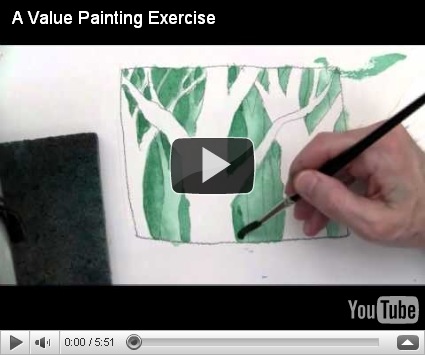
Let’s watch this video. Read, click and try product from the bottom of this blog under sponsor links. ^_^

Watch this above video. Read, click and try product from the bottom of this blog under sponsor links. Hope it can help you for better technique.
Here are info about it.
Students in this class use tiles as a canvas to create hand-painted and glazed works of art for home or garden. Working from floral still life displays or designs of their own choosing, students learn to use watercolor-like paints on bisque ceramic tiles to create luminous, colorful designs.
Experienced painters transfer their watercolor skills to a different medium, continuing ceramicists learn a new technique, and beginners in painting and ceramics explore the medium for the first time. Basic techniques for watercolor on ceramic are taught, along with the concepts of firing and glazing.
Still-life materials are provided as a source of inspiration. Each student finishes a six-tile panel during the class. The cost of tiles and firings is included. A supply list, including the watercolor glazing set, is mailed prior to the start of class.
Some info about it.
Watercolor out of the tube or the pan is at its full paintable strength. Seldom will it be used in that manner except when the design calls for it. However, the use of full strength color is by large discouraged due to bronzing when watercolor applied to the paper dries. Diluting and mixing color pigments with water changes its values, depth, and hue. When applying watercolor though, an important thing to remember is that the color will tend to be lighter when the color dries. If you want stronger color, you can make adjustments by applying slightly stronger hues before application or you can dab some more color to the object when the paint is already dry.
Creating test sheets
Before attempting to mix watercolor pigments, it is advisable to test out the colors first on a clean paper to get a good grasp on how it behaves and the color when it dries. Paint on a damp paper the colors that you will use. Maintain a uniform brush stroke starting with the lightest color to the stronger ones. Label the color and maintain a clean brush while doing the strokes. When the paints are dried compare it to the colors in your color well to judge how the final outcome of the colors will be.
Mixing a Puddle of Color
To start your puddle, wet the brush in clean water. This opens up all the hairs in the brush up to the ferrule. At this point, your brush would likely be fully loaded with water, if so, remove excess water by thumping the brush a few times or run the brush across the rim of the mixing well.
Add the first color (red for example) by touching the tip of the brush across your pigment and dilute it some more with your puddle of water. Start watercolor painting and continue the process until you get the color value that you desire.
You do not need to wash your brush if you want to add another color for combination. Touch the tip of your brush to a new color (Green for example), dilute it with your puddle of water, and apply it over the blue or parts of the blue that you painted previously. Continue adding strokes until the correct color is achieved.
To keep tube and pan colors pure, place small amounts of the pigments in a separate well. This way, all your colors stay clean and will not intermingle with another.
Practice mixing primary Colors
To achieve a very good grasp on how colors behave and how it will affect your work, it is advisable to practice with primary colors. Primary colors are the colors Red, Blue, and Yellow. Combining these colors in different degrees will give you infinite color combinations. Most professional artists use only these colors and have created masterpieces out of them.


